The coat was missing a button, but that wasn't really why Ava wanted a new one. Everyone at school wore shorter jackets. Hers had been chosen by her mother for warmth, a quality that did not improve its standing at the bus stop. When her grandmother offered to mend it, Ava said she didn't think it was worth the trouble.
“Bring it here anyway,” Gran said. “I need to see the trouble before I agree with it.”
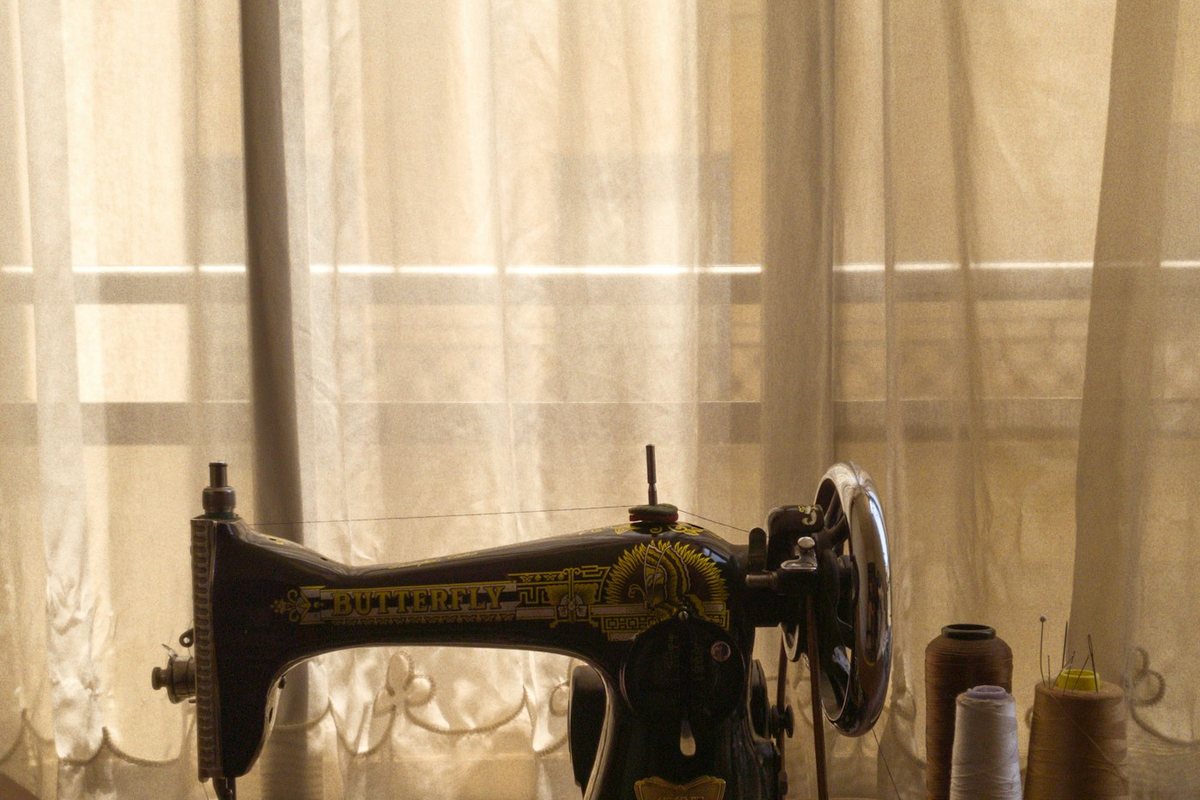
Her sewing tin contained buttons sorted by no system Ava could identify. There were brass ones, pearl ones, a toggle shaped like a small bone. Gran tipped a handful onto the table and asked Ava to look for something close to brown.
They found a match in color but not size. Gran said it would do for now. Ava watched her thread the needle on the third attempt. She remembered those hands moving faster. The thought made her uncomfortable, so she looked at her phone.
“You can do this one,” Gran said.
“I'll mess it up.”
“It's a button. We'll survive.”
The first stitches went through the lining at an awkward angle. Ava pulled them out. The second attempt tangled. Gran showed her how to hold the thread without gripping it like an enemy. There was something irritating about being bad at a task that looked so simple.
While Ava worked, Gran described the coat she had worn at sixteen. It had belonged to an older cousin and smelled faintly of a perfume nobody could afford anymore. Ava expected a lecture about being grateful. Instead, Gran said she had hated it and once tried to shorten it herself, with disastrous results.
“Your great-grandmother cried,” she said. “Then she fixed it. Then she reminded me about it for twenty years.”
Ava laughed. It was easier to listen when the story did not end with proof that previous generations had been better people.
The button held. It was visibly too small. Gran suggested moving it to a less noticeable position and using one of the original buttons at the front. Ava had not thought of that. Together they made the coat look like itself again, with one private irregularity hidden near the collar.
On the walk home, the coat was warm. This remained its principal virtue. Ava still wanted a different one and decided to save some weekend earnings toward it. Repairing what she had did not require pretending she liked it more than she did.
At youth group the next evening, someone asked what stewardship meant. Ava almost said it meant recycling, then thought of the sewing tin. She described fixing a coat instead of discarding it, and how the work had given her an hour with her grandmother. The leader let the answer stand without enlarging it into a speech.
Later that winter, a friend lost a button from her sleeve. Ava offered to mend it. She borrowed Gran's tin and took far longer than she expected. The thread knotted twice. Her friend sat on the floor eating crackers and talking about school.
When the coat was finished, Ava returned the tin and asked if she could keep a needle. Gran put three in a little felt square. “For when one disappears,” she said. Then she found a place at the table, and Ava sat down.